
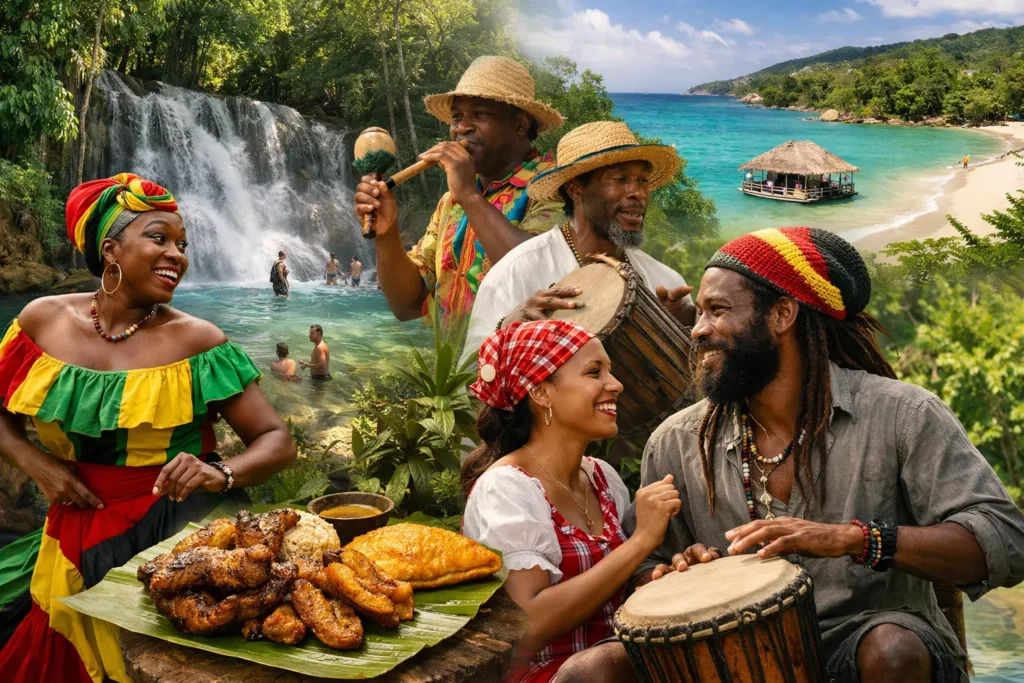
Some Jamaica memories are easy to plan – beach time, a catamaran cruise, a waterfall stop. The best Jamaica cultural experiences feel different. They stay with you because they connect you to the island’s music, food, history, faith, language, and everyday rhythm in a way that feels real, not staged.
If you want more than a checklist vacation, culture should be part of your itinerary from the start. Jamaica is not just a place to visit for scenery. It is a place to listen, taste, ask questions, and spend time in spaces where the island’s personality comes through clearly. For some travelers, that means standing in a place tied to reggae history. For others, it means eating jerk from a roadside spot, talking with local vendors, or learning how rum production shaped entire communities.
The right mix depends on where you are staying, how much time you have, and whether you want a relaxed day or a fuller outing. Here are 10 of the best ways to experience Jamaican culture while making your trip feel richer and more personal.
1. Visit the Bob Marley Mausoleum
For many visitors, this is one of the most meaningful cultural stops on the island. Located in Nine Mile, St. Ann, the Bob Marley Mausoleum gives you more than a music attraction. It places you in the rural setting that shaped one of Jamaica’s most influential global voices.
You get a stronger sense of how reggae grew from lived experience, spirituality, social commentary, and community life. Even travelers who are casual fans often leave with a deeper respect for Marley’s impact on Jamaican identity. The drive can be long depending on your resort area, so this experience is best for visitors who want substance and are willing to dedicate a good part of the day.
2. Taste Jamaican culture through a real jerk experience
Jerk is not just a meal. It is one of the clearest expressions of Jamaican culinary identity, with roots tied to maroon traditions, seasoning methods, and slow cooking over pimento wood.
A real jerk stop tells you a lot about the island. The smoke, spice, timing, and side dishes all matter. Chicken and pork are the best-known options, but the full experience often includes festivals, roasted breadfruit, bammy, or a cold local drink on the side. If you are deciding between an upscale restaurant and a roadside jerk center, it really depends on what you want. Restaurants may feel more comfortable, but roadside spots often give you the stronger cultural memory.
3. Tour the Appleton rum estate
Rum is deeply woven into Jamaica’s agricultural and economic history, and a visit to Appleton Estate makes that clear in a very accessible way. This is one of the best Jamaica cultural experiences for travelers who enjoy tasting tours but also want context.
You learn how sugarcane, distillation, aging, and craftsmanship come together in a product Jamaica is known for around the world. It also helps connect the beauty of the countryside in St. Elizabeth with a story that goes far beyond the bottle. For couples and groups, this tends to be an easy favorite because it balances education with fun. Families with young children may prefer a different kind of heritage outing.
4. Spend time in a local craft market
A craft market can be one of the most direct cultural encounters of your trip if you approach it the right way. It is not only about shopping. It is about conversation, personality, and seeing local creativity up close.
Wood carvings, straw work, paintings, handmade jewelry, and island-inspired fashion all reflect different parts of Jamaican expression. The experience works best when you take your time, ask about the work, and stay open to interaction. Some travelers love the lively back-and-forth. Others prefer a calmer retail setting. Both are valid, but if you want authentic energy, local markets deliver it.
5. Experience live reggae where locals actually gather
Reggae belongs on any serious culture-focused Jamaica itinerary, but the setting matters. A polished show for visitors can still be enjoyable, but a smaller venue or community event often gives you a better feel for how music lives on the island today.
What makes this special is not just hearing the songs. It is seeing how people respond to them. Reggae, dancehall, and roots music are part of social life, memory, and identity. Depending on the night and location, the atmosphere can be family-friendly and relaxed or more energetic and late-night. If you are traveling with kids or older family members, ask in advance what kind of crowd and volume to expect.
6. Explore Rastafarian culture with respect
Many visitors are curious about Rastafarian culture, but this is an area where respect matters more than quick photo moments. Rastafari is not a costume or a tourist theme. It is a spiritual and cultural movement with deep influence on Jamaican thought, language, music, and lifestyle.
The best experiences are the ones that create room for learning rather than performance. That could mean visiting a place where the history is explained properly, talking with a knowledgeable guide, or understanding how faith, food, herbal traditions, and worldview connect. If this interests you, go in ready to listen. You will get much more from it.
7. Visit heritage communities in St. Elizabeth and beyond
Jamaica’s culture changes from parish to parish, and that is part of what makes island touring so rewarding. In places like St. Elizabeth, you get a quieter, more grounded look at local life – farming districts, fishing communities, countryside views, and traditions that feel far removed from hotel zones.
This kind of day is ideal for travelers who have already done the major attractions or want to see another side of Jamaica. It may not come with the instant recognition of a famous landmark, but it often leaves a stronger impression. You start to understand the island as a lived-in place, not just a vacation backdrop.
8. Make room for Jamaican food beyond the resort
All-inclusive dining can be convenient, but it rarely tells the full story of Jamaican cuisine. Some of the best cultural moments happen over breakfast, lunch, or a quick roadside stop.
Ackee and saltfish, callaloo, fried dumplings, curry goat, patties, escovitch fish, mannish water, and pepper shrimp each tell a different story about the island’s influences and preferences. Not every traveler wants to experiment heavily with food, and that is fine. Even trying two or three local dishes outside your resort can shift your whole sense of the destination.
9. Learn Jamaica’s history at great houses and heritage sites
Culture is not only celebration. It is also history, including the difficult parts. Great houses, former plantation lands, and heritage properties can help visitors understand how colonial rule, slavery, resistance, and independence shaped modern Jamaica.
These stops are valuable because they add depth to everything else you experience – from music to language to foodways. Some tours lean heavily into architecture and scenery, while others spend more time on the human story. If you are choosing between them, the better option is usually the one that does not avoid complexity. Jamaica’s history deserves honesty.
10. Let everyday interaction be part of the experience
Not every cultural experience needs a ticket. Some of the best ones happen in ordinary moments – talking with your driver about local life, stopping for fresh fruit, hearing patois in motion, or asking where people actually go on a Sunday afternoon.
This is where a well-planned private tour can make a real difference. When transportation is reliable and your day is organized around your pace, there is more room to enjoy the island naturally instead of rushing from one attraction to the next. For visitors who want convenience without losing authenticity, that balance matters.
How to choose the best Jamaica cultural experiences for your trip
The best Jamaica cultural experiences are not always the most famous ones. They are the ones that fit your travel style and give you a genuine connection to the island.
If you are visiting by cruise ship, you may need shorter experiences with reliable timing. If you are staying for a week, you can mix iconic sites with deeper local stops. Families often do best with cultural outings that include food, scenery, or hands-on elements. Couples may prefer rum tours, music experiences, and private day trips with a more relaxed pace.
It also helps to think about energy level. Some cultural stops are easy and scenic. Others require a longer drive, more attention, or more emotional engagement. There is no single right way to do it. A strong itinerary usually blends one or two major heritage experiences with simple local moments that do not feel overplanned.
For travelers who want that kind of easy, enjoyable balance, working with a trusted local provider can save time and remove stress. A company like Aldae Tours can help organize transportation and day tours in a way that keeps your trip comfortable while still giving you access to the places, flavors, and stories that make Jamaica unforgettable.
The trip you remember most often comes down to what felt real while you were here – the music you heard, the food you tried, the people you met, and the moments that showed you Jamaica beyond the postcard.